





![“He Ended His 3-Year Contract” – Moses Bliss Speaks On Rumored Rift With Ebuka Songs [Video]](https://thetrending.com.ng/wp-content/uploads/2024/12/6105-he-ended-his-3-year-contract-moses-bliss-speaks-on-rumored-rift-with-ebuka-songs-video.jpg)


![I’m Still The Best Rapper In Africa, No One Has A Better Discography Than Me – Blaqbonez [Video]](https://thetrending.com.ng/wp-content/uploads/2024/12/6107-im-still-the-best-rapper-in-africa-no-one-has-a-better-discography-than-me-blaqbonez-video-1024x512.jpg)














![FEC restores funding for 13 national health regulators [Full List]](https://thetrending.com.ng/wp-content/uploads/2024/02/5394-fec-restores-funding-for-13-national-health-regulators-full-list.jpg)





![Reuben Abati: AFCON 2023: A Review [MUST READ]](https://thetrending.com.ng/wp-content/uploads/2024/02/5332-reuben-abati-afcon-2023-a-review-must-read-1024x643.jpg)











![You must question source of your children’s wealth – Kanayo tells parent [Video]](https://thetrending.com.ng/wp-content/uploads/2024/02/4795-you-must-question-source-of-your-childrens-wealth-kanayo-tells-parent-video-1024x550.jpg)


![Jay-Z Slams Recording Academy for Beyoncé’s Album of the Year Snubs at Grammys [WATCH]](https://thetrending.com.ng/wp-content/uploads/2024/02/4977-jay-z-slams-recording-academy-for-beyonces-album-of-the-year-snubs-at-grammys-watch-1024x672.jpg)








![Nigerian Comedian, Salo Cries Out As His Vehicle Goes Up In Flames [VIDEO]](https://thetrending.com.ng/wp-content/uploads/2024/02/4602-nigerian-comedian-salo-cries-out-as-his-vehicle-goes-up-in-flames-video.png)





![[Ekstra] Fløy hjem det som nå forvandles fra forretningsjet til Nato-bidrag](https://thetrending.com.ng/wp-content/uploads/2024/02/4464-ekstra-floy-hjem-det-som-na-forvandles-fra-forretningsjet-til-nato-bidrag-1024x768.jpg)





![BREAKING: Akpabio, Nat’l Assembly Delegation Storm Abidjan to Support Super Eagles [PHOTOS]](https://thetrending.com.ng/wp-content/uploads/2024/02/4326-breaking-akpabio-natl-assembly-delegation-storm-abidjan-to-support-super-eagles-photos-1024x741.jpg)

















News24 | LETTER TO THE EDITOR | Wilgenhof alumnus John Dugard speaks out against misrepresented history

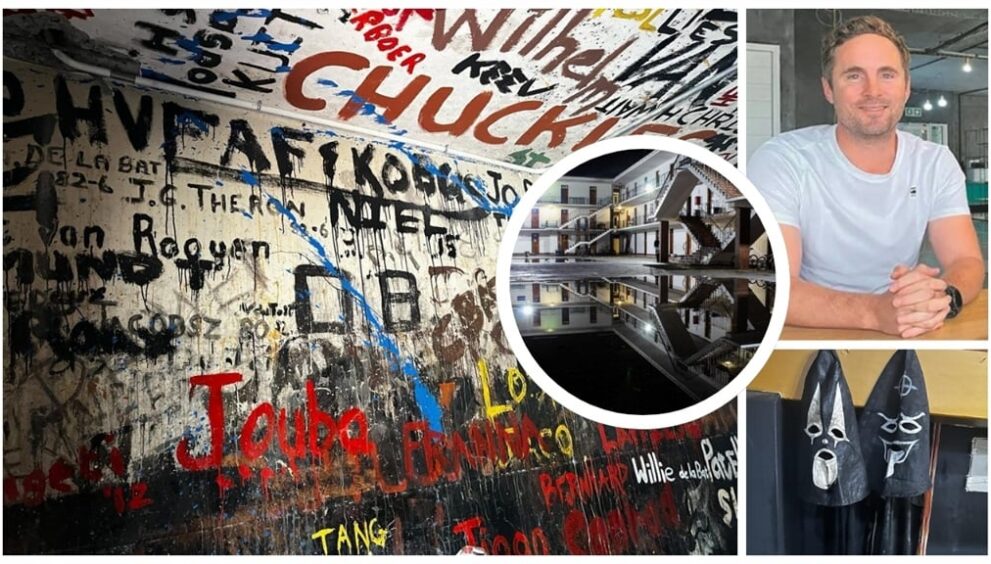
The autor writes that when a fair and accurate history is written of Afrikanerdom, Wilgenhof must feature as an important institution. (Image by News24, Pictures by Netwerk24 and supplied)
Human Rights lawyer Professor John Dugard reflects on his time at Stellenbosch University residence, Wilgenhof, saying that when he was there from 1955-1958, there was no promotion of National Party ideology. He argues the residence was fiercely independent and dissident.
I have found reading the investigation report about Wilgenhof painful. I was tempted to make a submission to the university but unfortunately, am too busy. Also, I am sure that many of the “oumanne” will make submissions.
I accept that times have changed and that a Wilgenhof with its Nagligte belongs to history.
READ | ‘No regrets’: Old Wilgenhoffer John Dugard questions one aspect of Stellenbosch University report
There is, however, one aspect of the report which, at least for the years 1955 – 1958, is wrong. The report was incorrect to say that Wilgenhof reflected the apartheid ideology and mentality of that time. When I was at Wilgenhof, there was no promotion of the National Party ideology. It was fiercely independent and dissident.
At that time in Stellenbosch, it was seen as a “communist outpost” (as “communism” was defined at that time in South Africa). There were vigorous debates about government policy. Wilgenhoffers openly ridiculed the Nasionale Jeugbond and Afrikaner-studentebond. Two of my years’ residents were sons of Cabinet ministers and they were given a hard time by others.
More significantly, two residents of my time – John Laredo (ARM) and Marius Schoon (COD), served substantial prison sentences under the apartheid government after they left Wilgenhof. We ran a besprekingsgroep (discussion group) that was banned by then-rector, Professor Hendrik Bernardus Thom. And so on. Dissent was a Wilgenhof tradition.
READ | Stellenbosch University’s Wilgenhof alumni welcome council decision for public input on closure
Also, in my time, Wilgenhof was the “koshuis” that best practised diversity. There was a substantial English-speaking minority and different political views and religious beliefs were respected. Prayers before dinner were led by all religious denominations, including Judaism.
In short, when a fair and accurate history is written of Afrikanerdom, Wilgenhof must feature as an important institution. It produced many of apartheid’s leaders. A prime minister (Hans Strydom), governor-general (Ernest George Jansen), a chief justice (Henry Allan Fagan) and at least two Cabinet ministers who did much harm (Eben Dönges and Eric Louw) were oud-Wilgenhoffers. On the other hand, Beyers Naude and Frederik Van Zyl Slabbert were also Wilgenhoffers. In my experience, it was an institution where ideas were exchanged and dissent was both common and accepted.
I spent my formative years at Wilgenhof and enjoyed them. I have no regrets.
– Professor Emeritus John Dugard at The Hague in the Netherlands. prof Dugard was part of the SA team at the ICJ in the Gaza matter.