






![“He Ended His 3-Year Contract” – Moses Bliss Speaks On Rumored Rift With Ebuka Songs [Video]](https://thetrending.com.ng/wp-content/uploads/2024/12/6105-he-ended-his-3-year-contract-moses-bliss-speaks-on-rumored-rift-with-ebuka-songs-video.jpg)


![I’m Still The Best Rapper In Africa, No One Has A Better Discography Than Me – Blaqbonez [Video]](https://thetrending.com.ng/wp-content/uploads/2024/12/6107-im-still-the-best-rapper-in-africa-no-one-has-a-better-discography-than-me-blaqbonez-video-1024x512.jpg)














![FEC restores funding for 13 national health regulators [Full List]](https://thetrending.com.ng/wp-content/uploads/2024/02/5394-fec-restores-funding-for-13-national-health-regulators-full-list.jpg)





![Reuben Abati: AFCON 2023: A Review [MUST READ]](https://thetrending.com.ng/wp-content/uploads/2024/02/5332-reuben-abati-afcon-2023-a-review-must-read-1024x643.jpg)









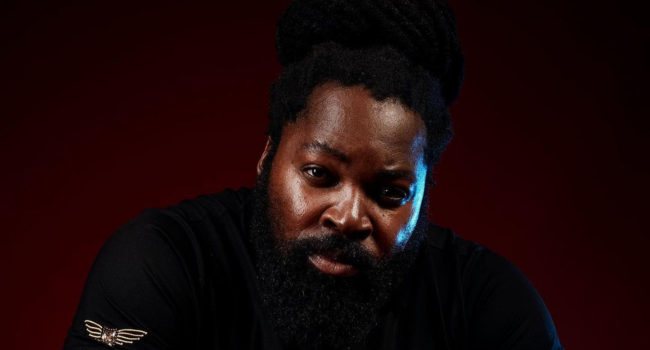


![You must question source of your children’s wealth – Kanayo tells parent [Video]](https://thetrending.com.ng/wp-content/uploads/2024/02/4795-you-must-question-source-of-your-childrens-wealth-kanayo-tells-parent-video-1024x550.jpg)


![Jay-Z Slams Recording Academy for Beyoncé’s Album of the Year Snubs at Grammys [WATCH]](https://thetrending.com.ng/wp-content/uploads/2024/02/4977-jay-z-slams-recording-academy-for-beyonces-album-of-the-year-snubs-at-grammys-watch-1024x672.jpg)








![Nigerian Comedian, Salo Cries Out As His Vehicle Goes Up In Flames [VIDEO]](https://thetrending.com.ng/wp-content/uploads/2024/02/4602-nigerian-comedian-salo-cries-out-as-his-vehicle-goes-up-in-flames-video.png)





![[Ekstra] Fløy hjem det som nå forvandles fra forretningsjet til Nato-bidrag](https://thetrending.com.ng/wp-content/uploads/2024/02/4464-ekstra-floy-hjem-det-som-na-forvandles-fra-forretningsjet-til-nato-bidrag-1024x768.jpg)





![BREAKING: Akpabio, Nat’l Assembly Delegation Storm Abidjan to Support Super Eagles [PHOTOS]](https://thetrending.com.ng/wp-content/uploads/2024/02/4326-breaking-akpabio-natl-assembly-delegation-storm-abidjan-to-support-super-eagles-photos-1024x741.jpg)

















Trevor Horn Defined ’80s Music, Then Kept Going


”Every day I found something new to try” —Trevor Horn (right) with his Buggles bandmate Geoff Downes, 1979.
Photo: Fin Costello/Getty/Redferns
Some artists simply reflect their era. Others, like Trevor Horn, manage to anticipate the next one. Even if you don’t immediately recognize his name, you know the hits he helped shape, for stars like ABC (“Poison Arrow”), Frankie Goes to Hollywood (“Relax”), Malcolm McLaren (“Duck Rock”), Grace Jones (“Slave to the Rhythm”), Pet Shop Boys (“Left to My Own Devices”), and Art of Noise (“Close to the Edit”). For the band Yes, he not only produced their biggest hit (“Owner of a Lonely Heart”), he also briefly — and improbably — joined the band as the replacement singer for Jon Anderson. And before that, Horn’s band the Buggles scored a British chart-topper with “Video Killed the Radio Star,” whose lyrics anticipated the entire music-video revolution, making it the natural choice to be the first clip ever played on MTV. In its wake, Horn became one of the first producers to realize the full potential of then-new contraptions like the Fairlight CMI synthesizer and the Roland TR-808 drum machine. Small wonder journalists came to call him “the man who invented the ’80s.”
The ’90s saw Horn soar again: He produced Seal’s first two albums, along with successful tracks for Paul McCartney, Rod Stewart, and Sinéad O’Connor. In the aughts, he branched out to work with artists as varied as Leann Rimes and Belle & Sebastian. To capture all this history, Horn, now 74, has written a new memoir named after the Buggles’ second album, Adventures in Modern Recording. True to its title, the tome offers invaluable insights into his techniques, sensibility, and style. Even so, he made sure to start our interview, conducted via Zoom from his home studio in London, with a caveat: “I’m talking about the past here,” he said. “I think a lot of my ideas for how things should sound are out of date.”
One key thing your book illuminates is the sharp distinction between a “song” and a “record.” In a nutshell, what’s the difference?
A song is just a blueprint. A record is the final product you’re going to use to sell that song. Quite often when you’re a producer you get a demo of a song and it’s very basic. Then you have to arrange the song and create sounds for it. You also have to figure out which key it’s going to be in — the one where the singer sings it best. That in itself can be quite a trip. I feel like each record is a battle.
Can you give an example?
With “Crazy” by Seal, I spent ages trying to figure out how to make the arrangement pay off. I’ve found that, to keep people interested for four minutes — and a lot of my best singles have been four minutes — the song needs to develop. It should make you feel like you’ve had an experience. Originally, “Crazy” just had a verse and a chorus and a drum break. I kept feeling like it needed something more. Seal had another bit where he was singing “ba-de-da de-bah-dah” and I said, “Why don’t you write lyrics for that part?” He came back the next day with the line, “In a sky full of people only some want to fly.” I thought that was a really good lyric. I had an early version of Pro Tools called Sound Tools that I fiddled with to come up with the idea of having a pause, before dropping back into the part that says, “but we’re never going to survive …” When I got that bit I thought, Wow, I’ve finally got the record.
Your longest-lasting professional relationship has been with Seal. But the record labels didn’t get him at first. How come?
Somebody said, “a Black guy who sounds like Peter Gabriel, that’s not commercial.” They completely missed what was going on. When I heard him sing, I thought it was the best vocal I’d ever heard. I knew his first song was going to be a big record because it was so emotive. I was surprised that nobody in the industry saw the line “solitary brother, is there still a part of you that wants to live?” What a great fucking line!
Another example of the recording process being a battle was when you produced Frankie Goes to Hollywood’s smash “Two Tribes.” You tell a funny story in the book about Elvis Costello — who was working in an adjacent studio at the time — recording and mixing an entire album before you finished working on that one song.
It just seemed to be taking a long time to get that record to gel the way we wanted it to. The bass was a particular problem. That’s when Elvis came in and said, “You aren’t still working on that bass part, are you?” But when the song came out, it was No. 1 in England for nine weeks, so clearly, we were after something.
When were you first aware of your special attention to sound?
I always listened very intently to records. I realized that it takes a very long time to understand how to listen to what you’re hearing. In my mid-20s, I was in a couple of pretty awful bands, but they were the kind where you could earn a living doing sessions. When I finally got the chance to get into a proper studio, I was just so fascinated by the whole process. I loved everything about trying to figure out how they were doing it. I was desperately trying to make normal-sounding records like the ones I’d heard, but I didn’t seem to be very good at it. The minute I went off the grid and tried to do something peculiar, it seemed to work for me.
What was that moment?
We had written a song called “Baby Blue” that was covered by Dusty Springfield. We made a demo of it where we used a drum machine and made a snare drum out of a telephone directory that we were hitting with a wooden spoon, which we then put through a fuzz box. We made this very quirky rhythm track and it really bounced along. But when I heard the final version that the producer of the record had made, I thought, What the fuck is this? They should have put Dusty on our demo! Our version sounded so weird and different for 1978.
It was in that period, as you write in the book, that you realized “the future is techno.” At the time the prevailing sound was classic rock and punk. What brought you to the realization that the future lay elsewhere?
By listening to Man Machine by Kraftwerk. Then I heard Donna Summer’s “I Feel Love.” I was spending every night in places where people danced. The only drum machine I managed to get my hands on at that point was a thing called the Mini Pops Junior, which was a little box that had pre-made beats. It was the kind of thing a hotel piano player would use. I found a way of getting it to play four-on-the-floor and then thought, This is the way to go! I loved Kraftwerk, but they had a very dinky sound then. I wanted to see if I could take that idea and put it in the mainstream so that normal people could hear these machines. Actually, on “Video Killed the Radio Star,” there isn’t a sequencer on it. It’s all played by hand but in a way so that people said, “It sounds like a fookin’ machine!” We would always say, “That’s what we want!”
Of course, when you wrote “Video Killed the Radio Star,” there was no such thing as the music video as a major force. Did you envision something like MTV coming?
No. My head was all in J.G. Ballard and the other sci-fi stuff I was reading. I could see that some day people would sit with computers and invent groups. That was what the Buggles were meant to be — a silly pop group invented by somebody on a computer.
Since your song kicked off MTV — and considering what a colossus that became — did you ever think: I’ve created a monster!
[Laughs.] At the start, it was a new art form and I would watch it. But after a couple of years, when it became ubiquitous with shots of people blowing their hair with wind machines, it started to get on my nerves. I began to think, Would I enjoy “Like a Rolling Stone” more if I’d seen a video of it? The answer was no.
Yet, associations to MTV are part of why you became known as “the man who invented the ’80s.” How did you feel about that tag?
I was very embarrassed by it the first time I saw it because I thought people would think I’d thought of it! I tried to refute that but after 20 interviews where you’re asked about it, you give up. The fact is, I was lucky. I was first into a big field that nobody had been into. Here were all these new tools and no one was really using them. Every day I found something new to try.
One person who did some technical work on “Radio Star” was a 23-year-old Hans Zimmer. Did you have any idea then that he would go on to become one of Hollywood’s most prolific soundtrack composers?
I wrote a rap in the middle of “Radio Star” that I tried to get Hans to do. A couple of lines I wrote were, “You were in my band when you were 23 / I never thought you’d end up famous-er than me!” Hans was a charmer, but I couldn’t see him in the pop-music world. He was a lot more comfortable when he went into film, and he’s been amazing at it.
Because of your love of technology, I‘m wondering if you’ve used AI in a production yet.
I used an early version with Rod Stewart. I had to take a recording of him and the Faces doing “Stay With Me” and put an orchestra on it. It was already a terrific-sounding record. When I took it on, my motto was “I’m not going to spoil any of this.” But there was no multi-track of the recording, so I couldn’t change the mix. You needed to somehow cut a hole in the track so you can fit the orchestra in there. You’ve got to be so careful not to mangle things. But it did really well.
The idea that AI would make creative decisions in music doesn’t appeal to me at all, though. And the idea that AI can make anybody sound like anybody isn’t really true. For instance, my son, for a laugh, sent me a version of “Video Killed the Radio Star” with Elvis Presley singing it, supposedly. The problem is, I don’t phrase even remotely like Elvis Presley, so it doesn’t work. Maybe you could teach AI that, but who knows?
Horn, second from left, with Yes.
Photo: Getty/Getty Images
In 1980, when Yes frontman Jon Anderson was forced out, they asked you to take over. That move was recently included in a Rolling Stone list of the “50 Worst Decisions in Music History.” What say you?
I really didn’t want to do it. I knew that I was nowhere as good as Jon Anderson. They really pushed me into it because they had a sold-out tour that they needed to get through. For me it was just a thing of, Are you really going to say no? This is the kind of thing that happens once in a lifetime. I was fucking terrified before the first show we did, especially because we’d never played the set all the way through but once. I did my best. The way I looked at it was, it’s either Yes with me, or no Yes. So, put up with me and listen to what great musicians they are!
After the tour, Yes fired you. But three years later they brought you back to produce the 90125 album, which became their biggest seller due to the hit “Owner of a Lonely Heart.” At the same time, the group, as well as fans like me, thought that song was a total sellout. Being a huge Yes fan yourself, do you see that point of view?
Of course! Are you kidding? If you ask me, or a Yes fan, what’s their favorite Yes album, I would say Close to the Edge, with Relayer second and probably The Yes Album third. I think 90125 is a good album but it’s not the best Yes album by a long shot.
You worked with Paul McCartney on one of his better solo albums, Flowers in the Dirt. But when he wanted to work with you again, the scheduling wasn’t right, so you demurred. And as you note in the book, he didn’t take it well. How did it feel to have a Beatle lose his shit on you?
[Laughs.]. I could see why he was pissed off because he had enjoyed himself the previous time. But even when you’re a Beatle, ultimately you’re just a bass player and singer and songwriter. I’d be more worried if it was Vladimir Putin screaming down the phone at me.
One of your biggest hits was Rod Stewart’s cover of Tom Waits’s “Downtown Train.” You write in your book that the cover version earned over $1 million in publishing royalties for Waits. But he wasn’t into the original idea. Why?
I think it horrified him that Rod would sing the song. He liked even less the idea of Rod doing his “Waltzing Matilda.” At that moment in time, Rod wasn’t everybody’s cup of tea. “Downtown Train” was the beginning of a way back for him. Certainly, Rod got the song to loads of people who never would have heard it.
One of the few American artists that you’ve had a major hit with is LeAnn Rimes, for “Can’t Fight the Moonlight.” What stood out to you about her?
I remember she sang “Moonlight” three times and I made a compilation of the takes. When she heard it, she sang the song again remembering all the choices I made and that was pretty much the lead vocal! When I first heard her sing on the mic, I was in awe. I asked her, “Where did you learn to sing like that? You’re so young.” She told me that she was leading her own band when she was 11. It didn’t come out of nowhere.
Why don’t you work with more American artists?
Not many Americans have the nerve to hire an eccentric old English record producer!
You did get to work with a great artist we lost this last year, Sinéad O’Connor. What are your memories of her?
We did a song for the end of the movie Veronica Guerin. It was a beautiful song, and I wrote the lyrics. What I remember was that the director hadn’t liked them very much. In fact, he hated it.When I got to the studio to record I was really nervous because having somebody tell you that they don’t like your song isn’t very encouraging. But the first thing Sinéad said to me was, “I fookin’ love the lyrics! It’s a really great song!’ I said, “Darling, I love you.” And she was terrific on it. I’m so sad that she passed so young. She was a troubled soul, but she had the most beautiful voice.
You said at the start of our talk that the sounds and techniques of modern pop production are very different now from when you broke through. One major difference is that artists today can buy set programs from a kit that allows them to work at home alone or with few musicians. Is something lost in that change?
When I started out, the social aspect of recording was the thing. My job was to deal with musicians to get a good performance out of them and maybe direct them where to go. It happens so rarely now to have a group of people playing together. Something is lost when it’s just you and somebody else on a workstation. The gain now is that putting together a vocal performance from nine or ten versions takes a fraction of the time it used to. Whenever things change, something is lost and something is gained. That’s true in recording and in life too.
This interview has been edited and condensed.
The original song was produced by Glyn Johns.
Joel Schumacher
Trevor Horn Defined ’80s Music, Then Kept Going
https://pyxis.nymag.com/v1/imgs/8a7/6a2/022b6dfae804f245376d8df40a6aafb436-Trevor.png

